Kategoriarkiv: Blogg

De bättre spektrala artiklarna

Har du lösningen på mitt problem?

Snart kommer vintern. Jag hör Ned Starks röst i huvudet när jag går upp för trapporna mot campus. Winter is coming. Sommaren var skön, hösten var kort men fin och snart är det vinter. För det flesta betyder det en tid då man tar på sig sin fula ylletröja som man gömt längst bak i skåpet, man kanske till och med tvingar sig att använda lång-finns det någonting värre-kalsonger.

Det är nog det mest djävulska klädesplagget. De är svårt att dra på sig dem, man ska dra och dra och dra och aldrig hittar man ut genom dom långa långa långa kalsongerna. När fötterna väl hittat ut genom bomullssahara så ska man dra på sig ett par vanliga byxor, för att gömma sina skamfulla långkalsonger. Byxorna sitter såklart obekvämt och långkalsongerna åker upp till knän när man drar på sig byxorna. När man väl har på sig hela helvetet så har man först riktigt mysigt utomhus när man står och väntar på bussen. Kanske det var värt mödan ändå. Det finns ju fortfarande känsel i benen fastän bussen, naturligtvis är sen, på grund av den överraskande kylan (alltså blev det kallt i år igen?? Det brukar det ju inte!!).

I backen på väg mot Gumtäkt tänker jag på vilken tur jag har. Det har ännu inte snöat, eller slaskat, och det betyder att universitetets officiella bobsleighbana inte ännu har öppnat och man kan gå upp för backen, istället för att dö.

När man rundat halva kampuset, för att ingången är placerad så man måste gå maximalt lång tid utomhus, så kommer man in den halvljumma värmen i Physicum. Allt väl, man kan chilla och äta samma panini man ätit i ett halvår, men plötsligt börjar det bränna. Mina ben håller på att koka och det finns ingenting jag kan göra. Låren har beställt bastu och ska minsann ha valuta för pengarna. Det enda jag kan göra är ett allt för långt och mystiskt toalettbesök, som skulle väcka misstankar bland alla andra på hela kampus. Jag skulle kunna be någon stoppa mitt huvud på en påle, och följa Ned Starks fotspår men jag undrar om inte det finns någon mindre våldsamt sätt.

Har du någon lösning på långkalsongsdilemmat? Snälla du, skriv en kommentar här under så lovar jag ära eller berömmelse eller tomrum. Får se vad jag har på lager just då.

  • Emil E.

Deus Ex Etik – vetenskap eller science fiction?

(OBS! Följande artikel innehåller bakgrundsinformation om spelen Deus Ex: Human Revolution och Deus Ex: Mankind Divided, publicerade av Eidos Montreal 2011 respektive 2016. Läs vidare med egen risk.)

Året är 2029. Förenta nationerna har framfört ett lagförslag med målet att återställa mänskligheten till dess naturliga tillstånd (Human Restoration Act). Lagen skulle medföra borttagning och förstöring av olagliga mekaniska proteser och förstärkningar. För att placera detta i sammanhang tar vi en kort genomgång av de senaste, knappa 100 åren [1].

1961 – MIT skapar den första datorstyrda robothanden.

1977 – Tai Yong Medical påbörjar produktionen av silikonbaserade proteser.

1978 – Forskare i Australien lyckas koppla ihop en elektronisk apparat med centrala nervsystemet på en fysiologisk nivå. Första cochleaimplantatet implementerades på en människa genom att använda denna teknologi.

1996 – Hugh Darrow återupptar och förnyar sin familjs protesföretag ett år efter att ha skadat sitt knä i en skidolycka och grundar därmed Darrow Industries.

1998 – Forskare vid Emory universitet skapar första hjärnimplantatet som kan styra rörelse.

2000 – Artificiell silikonretina (ASR) användes för första gången för att behandla individer med grova synfel.

2002 – Darrow Industries lyckas fläta samman elektroder med levande nervceller, för att skapa en omgivning där organisk cellvävnad kan acceptera syntetisk protesmaterial. Forskning inom ”mekaniska proteser och förstärkningar” ökar starkt inom Darrow Industries och Sarif Industries.

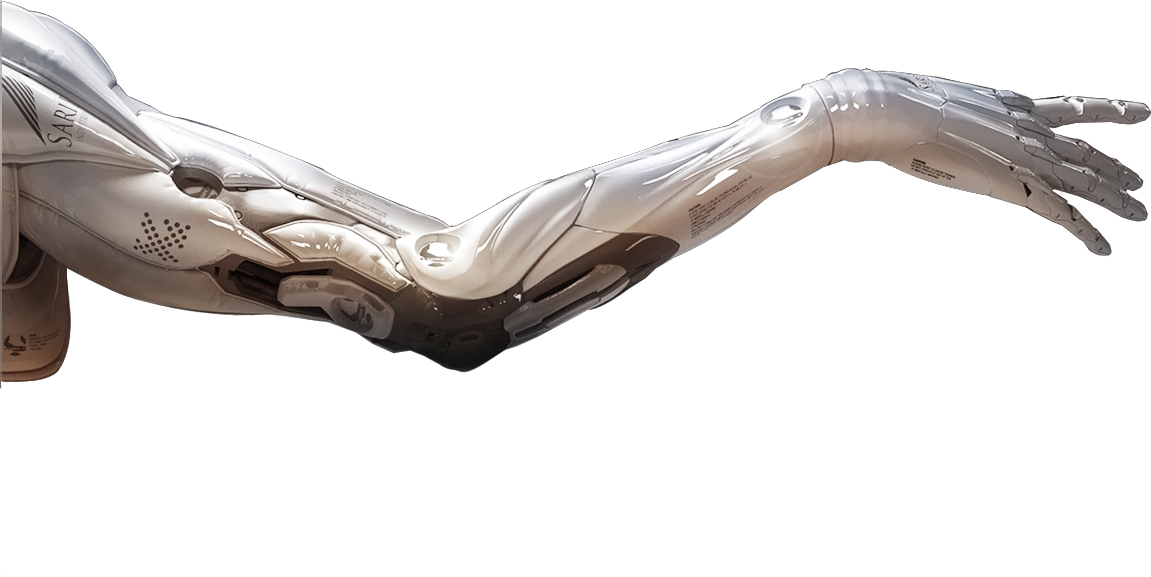
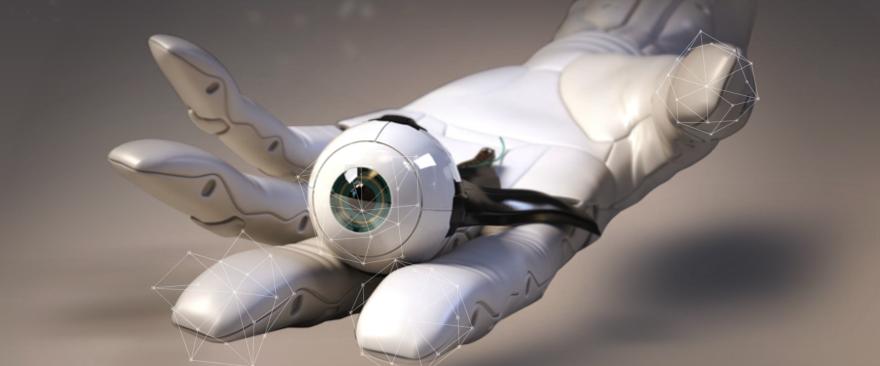
Bioniska ögat tillverkat av Sarif Industries.
Bioniska ögat tillverkat av Sarif Industries. Bildkälla: http://www.pcgamer.com/explore-deus-ex-human-revolutions-augmentations-with-sarif-industries-site/

2007 – Militärstyrkorna runt om i världen tillämpar mekaniska proteser i krigsföring, både på grund av styrka, men också för att värva skadade veteraner tillbaka till tjänst.

2013 – Den 50:nde sjukvårdskliniken för mekaniskt förstärkta patienter öppnas i New Delhi.

2020 – Mekaniska proteser och förstärkningar börjar bli vidsträckta. Darrow Deficiency Syndrome (DDS) diagnoseras i förstärkta individer. Den orsakar att kroppen förkastar proteserna och förstärkningarna på cellnivå. Ensamrätten till produktion av läkemedlet Neuropozyne säljs av Darrow Industries till företaget VersaLife.

2021 – Antoine Thisdale, en amerikansk arbetare i oljebranschen, stämmer staten för sin rätt att amputera sina armar för att få mekaniska armproteser. Högsta domstolen i USA bestämmer att Thisdale har rätten att amputera sina armar, och därmed lagstiftas den allmänna rätten för valfri förstärkning.

2022 – Mänsklighetens Front (Humanity Front), en politisk organisation emot mekanisk förstärkning grundas.

2024 – En amerikansk frågesportsdeltagare blir fast för att ha intelligenshöjande implantat, politiska rörelsen mot mekaniska förstärkningar ökar drastiskt i populäritet.

2027 – VersaLife klarar inte av att producera tillräckligt med Neuropozyne vilket skapar ett globalt underskott, speciellt hos de fattiga.

2027 – Den så kallade AUG-incidenten skapar världsomfattande kaos och ytterst negativa reaktioner mot mekaniska förstärkningar.

2028 – Förenta nationerna instiftar Taggart lagen som kräver klassifikation och uppföljning av alla mekaniska proteser och förstärkningar för att reglera industrin. Samlingen för de Förstärktas Rätter (Augmented Rights Coalition) grundas som en sammanbildning av grupperna runtom världen som stöder mekaniska förstärkningar.

Mänskligheten har alltid haft talang för propaganda.
Mänskligheten har alltid haft talang för propaganda. Bildkälla: http://www.pcgamer.com/deus-ex-mankind-divided-marketed-with-aug-awareness-posters/.

2028 – Som en följd av Taggart lagen blir mekaniska proteser och förstärkningar svårare och svårare att få tag på, vilket ökar efterfrågan på svarta marknaden. Mekaniska förstärkningar blir symboler för brottslighet och orenhet.

2029 –Förenta nationernas säkerhetsråd föreslår lagen Människans Återställning (Human Restoration Act) för att ta bort och förstöra olagliga förstärkningar. Debatten pågår…

Låt oss hoppa tillbaka till vår tid och värld. Berättelser och världar från TV-spel brukar vara fyllda med fantasifulla intriger och personligheter, men nu och då lyckas de säga något om den värld vi själva lever i. Världen i Deus Ex har en teknologidriven historia som täcker alla krav för ett gott och underhållande händelseförlopp inom science fiction. Om man bortser från årtalen så kan man dock inte undvika att dra paralleller till verkligheten.

Under de senaste 30 år har kolfiber, 3D-printning och biometri gjort det allt lättare att skapa förmånliga, välfunktionerande och individuella proteser för individer med amputerade lemmar. Implantat för retinan i ögat har utvecklats av företaget Second Sight för att lindra och upphäva symptom av vissa synsjukdomar [2]. Forskare vid Texas universitet skapade 2012 konstgjord muskelvävnad av nanotekniskt garn och paraffinvax, vilken kan generera 85 gånger mera ren mekanisk energi jämfört med t.ex. människans muskler [3]. Symbiosen mellan människa och maskin är definitivt inte lika fullständig som i världen av Deus Ex, men givet vetenskapens framgångstakt kan situationen uppenbara sig snabbare än vad man kunde tro.

Vilka frågor kommer mänskligheten att möta vid ett sådant tillfälle? Är vår moraletik utrustad till att behandla dessa frågor? I världen av Deus Ex svängde attityden snabbt från beundran och välmående till oförlitlighet och oro. Vad betyder det att vara människa? Är vi mera än summan av våra delar? Om våra kognitiva processer förbättras av ett implantat, är vi fortfarande i kontroll om hur vi tänker? Vem borde övervaka distributionen och användningen av mekaniska förstärkningar? Hur kontrolleras medicinering och reparation av sådana komplicerade konstruktioner? Hur undviker vi segregering och diskriminering?

Den senaste skandalen med priserna av EpiPen i USA visar att mänskligheten inte alltid lyckas göra bättre än sitt like i TV-spel. Neurologiforskaren Nadja Oertelt presenterade för en dryga månad sen en etisk ram inom vilken framtida beslut borde behandlas. Som avslutning följer hennes 8 riktlinjer för en etisk förstärkt framtid [4]:

  1. Utveckla rättvis politik och intelligent reglering av förstärkningsteknologier.
  2. Identifiera komplexiteten i mekanisk förstärkning och integrera komplexiteten med övervägandet av etiska beslut.
  3. Minimera social splittring och avbrott.
  4. Skapa undervisningsmaterial för allmänheten och för de som själva överväger förstärkning.
  5. Förstå rätterna och skyldigheterna av förstärkningssamhället
  6. Ta i bruk etiska principer för beteende och forskning.
  7. Stödja rättvisa och jämlikhet för alla.
  8. Garantera autonomi för individer i förstärkningsärenden.


  • Jonas


Källor

[1] Deus Ex-wikia,  Timeline, http://deusex.wikia.com/wiki/Timeline

[2] Second Sight, http://www.secondsight.com/

[3] University of Texas at Dallas, Wax-filled nanotech yarn behaves like powerful, super-strong muscle, ScienceDaily. ScienceDaily, 15 November 2012. <www.sciencedaily.com/releases/2012/11/121115141534.htm>.

[4] Nadja Oertelt, An ethical framework for human augmentation, Human by Design conference, August 3, 2016, http://www.humanxdesign.com/downloads/080116-HXD-EFHA-%C6%92.pdf

From Lancaster to Helsinki

After finishing high school and serving my time in the Finnish Defence Forces, I packed my bags and moved to England to study physics at Lancaster University.

I studied there for a year, before deciding to move back to Finland to continue my studies at the University of Helsinki. Here I am to bring forth some of my experiences and the differences of studying in the different countries.


Lancaster:

Studying:

When the time came for me to pack my bags for England, I thought there had to be a thousand things that had to be taken care of regarding my studies once I got to Lancaster; choosing modules, finding out what books to buy, making my schedule, etc., etc. After moving day and the first shock of living in another country, I realised that all had been taken care of for me. During the first introductory lectures I was handed all the information I needed regarding my studies, all my first-year modules were already chosen for me, and all I had to do was to follow the schedule that had been made for me. My first thought was that there was a lack of choice in your studies, but later on when studying in Helsinki I realised that having everything planned out for you can be quite convenient.

In the physics department of Lancaster University there is  a 70% compulsory attendance rate in lectures for a module. This is quite surprising for higher education where one should be free to study on ones own terms, provided that the studies go well. I for one am a non-auditive learner and found it quite frustrating to have to sit through lectures without getting any more useful information from them except for knowing what I currently should be studying. During the second half of my year in Lancaster I started skipping more and more lectures, provoking the compulsory attendance rate, in order to study on my own. This tactic ended up having a positive impact on my grades and I regretted not skipping lectures during the first half of the year.

A normal week of physics studies in Lancaster Uni included lectures, workshops and seminars. The purpose of a workshop was to help student solve weekly worksheets that had to be submitted in every module throughout the year. The seminars consisted of a walk-through of proposed solutions to problems in the worksheets. These workshops and seminars were not compulsory, but crucial in order to solve and understand the worksheets, that were based on the theory learned in the modules. I personally found the workshops and seminars to be of much more value than the lectures.

In the beginning of the year every physics student was assigned to a director of studies, whose purpose was to be a form of support for you studies. The director of studies was to call you in for a chat every couple of months or so, to see how your studies were going. You could talk about anything with you director of studies, but there was usually an emphasis on your studies. I found my director of studies to be very helpful and I gave him a lot of feedback of the modules I was studying, and every time I saw him I protested the obligatory attendance on lectures.


Student life:

In Lancaster, Lancaster University Student Union Housing, or LUSU Housing, was the organization that took care of accommodating new students in Lancaster, either on campus or in town (the campus is situated about 4 km south of the town).  When you start studying in Lancaster you will be sorted into a college. The college you are in dictates to what kind of a accommodation you can move into if you choose to live on campus. What you study as a major  and which college you are in do not walk hand in hand.  If you choose to move to campus, for your first year, you will probably move into a flat together with a lot of people that do not study the same subject as you, and those people will most likely be the ones you end up socialising and going out with the most during your first year. Thus, creating a web of contacts with people of very different backgrounds and personalities.

In addition to the college system, the Lancaster Uni offered a range of societies and sports clubs,  founded and managed by students, that you could join. Joining a society or club gives one the opportunity to meet a whole new range of people from different colleges and fields of study.  I myself joined Lancaster University’s handball team and met a lot of people from different parts of the world, and I played in various university tournaments in different parts of England.


Helsinki:

Studying:

When the time came for me to to pack my bags for Finland, I felt overly calm. I knew that there was nothing to worry about and was sure that everything would be all right once term started at the University of Helsinki. Once I was settled in and ready for my second year of studies, I realised I did not have any idea of how to get started with my studies. There was no schedule made ready for me, there was little relevant information given at the introductory lectures I attended, and I had no clue whatsoever what modules I was to study, and this time I had to choose the modules myself. The credits gained in a module at the physics department range from 3 to 8, which complicates the planning of a 180 credit Bachelors degree especially when you have come in from abroad with a slightly different credit system. This made me really long for all the modules being chosen for me in Lancaster

In the physics department in Helsinki there is no obligatory attendance rate. Now, at first this seemed good. But later on I realised that, in some modules, the lecturers teach things that do not necessarily come up in any lecture notes or course books. Most lecturers do not seem to be doing this on purpose, it rather takes the form of examples of problems they come up with on the go. But some lecturers actually say that these things are exclusive for those who come to the lectures. This really begs the question: Is there really a need for such methods to pressure people into attending lectures at a higher education, especially when there are people that do not learn the auditive way? Why not just post it all in the lecture notes?

The structure of a normal week of physics studies is quite similar in Helsinki, as in Lancaster. There are lectures and workshops to attend, and worksheets to submit. There are no seminars as in Lancaster, they are baked into the workshops instead. This means that usually the students demand dictates how the workshops go: A walk-through of last weeks worksheet, help in solving next weeks worksheet, or a bit of both.  There is simply not time in these workshops to do both, resulting in the risk of there being a lack of understanding in some areas of the theory learned in the modules. In some modules the lecturers post online model answers to the worksheets, which I have found to be very educational and helped me in my studies. I once asked the head of the physics department why he does not post model answers for the worksheets in his module in electrodynamics, and he replied that I have to go to the workshops. Once I explained to him that there is not always time to have a thorough walk-through of the worksheets in the workshops, he simply replied that then I would have to get the worksheets right on my own. I found this advice very unhelpful and was surprised to hear such a remark from the head of the department.

The biggest difference between studying in Helsinki would be that there is nothing similar to a director of studies as in Lancaster. The director of studies really gives one a feeling of the university knowing that you are there, studying. In Helsinki I have never had that feeling.

Student life:

In Helsinki there is no accommodation organization tied to the university . One main reason for this might be that there is no core campus. All the faculties are spread out all over town and there is no “living on campus”. There are some student housing companies like HOAS and Arcada Nova that are usually cheaper alternatives for less earning students.

Once you start uni, there is usually a society tied to the specific field of your studies, that helps you get started. There are some similarities to the societies in Lancaster, but the biggest flaw in Helsinki is that you are “forced” to socialise with people that study the same subject as you. If you feel like socialising with people studying different things, you will have to get out of your comfort zone and attend parties arranged by other societies.

In Helsinki the student parties usually take the form of a “sits” or “sitz”  (shortened from “sittning”) or a seated meal. These academic festivities usually start around 6-8 pm and last for a couple of hours, during which a three-course dinner is enjoyed and a lot of drinking songs are sung. Then after the traditional punsch (do not confuse with punch) the seated meal ends and the guests relocate to another venue where the after party takes place.

Before ending this article it is also worth mentioning that there are great cultural differences between England and Finland, and that there also is a quite hefty tuition fee for studying in England, whilst it is free to study in Finland.

If there is anything that is to be learned from this article, it is that every place has its flaws. But I do not intend in any way to mock the current state of higher education in either country. I have mainly brought forth my point of view and experiences from studying in both countries.

Emil